No products in the cart.

Uncategorized
Custom T Shirt Printing Australia: 2026 Price & Quality Guide
21
Jul
Jul
If you are searching for custom t shirt printing australia in 2026, you have more options than ever, but the sheer volume of choices can make the decision harder, not easier. This guide cuts through the noise. Whether you are an event organiser, a small business owner, a sports team captain, or someone who simply wants a single high-quality personalised tee, you will find clear, practical information here. We explain exactly what you are paying for, which printing method suits your project, how to get the best value without sacrificing quality, and what to expect for delivery times to Sydney, Melbourne, Brisbane, and regional areas.
Table of Contents
- Why Choosing the Right Blank Shirt Matters (AS Colour vs. Gildan)
- Decoding the Decoration Methods: DTG, Screen Printing, DTF & Embroidery
- Realistic Pricing for Custom T-Shirts in Australia (2026 Update)
- Turnaround Times & Shipping Across Australia
- Sustainability & Ethical Production – What Australian Buyers Want in 2026
- How to Design Your Own T-Shirt (Without Needing Graphic Design Skills)
- Frequently Asked Questions About Custom T-Shirt Printing Australia
- Conclusion – Your Next Step for Custom T-Shirts in Australia
Why Choosing the Right Blank Shirt Matters (AS Colour vs. Gildan)
The blank garment is the foundation of your entire project. A cheap, ill-fitting blank will ruin even the most brilliant design, while a quality blank elevates a simple logo into something people genuinely want to wear. In the Australian market, two brands dominate the conversation: AS Colour and Gildan. Understanding the difference between them is the first step toward a successful print run.
AS Colour has cemented itself as the premium choice for Australian buyers. Founded across the Tasman but deeply embedded in the local market, AS Colour shirts are known for their heavier fabric weight, boxier modern fit, and consistent quality. The cotton feels substantial, the collars hold their shape after repeated washing, and the range of colours is thoughtfully curated. In 2026, Australian businesses increasingly choose AS Colour for corporate wear, staff uniforms, and client merchandise because the garment itself communicates a level of care and quality before anyone even reads the print.
Gildan occupies a different but equally important position. It is the industry workhorse: reliable, widely available, and significantly more budget-friendly. A Gildan Heavy Cotton tee will not win any awards for softness straight out of the packet, but it prints well, wears hard, and keeps costs down on large runs. For school fundraisers, one-day events, tradie giveaways, or any project where price per unit is the primary concern, Gildan remains the sensible choice.
At QTS Workspace, we stock both ranges because we know one size does not fit all budgets or purposes. The right choice depends entirely on how your shirts will be used and how you want your brand to be perceived.
Decoding the Decoration Methods: DTG, Screen Printing, DTF & Embroidery
The method used to apply your design to the shirt affects everything: cost, durability, colour accuracy, and minimum order quantities. Here is how the major techniques compare in 2026.
Direct-to-Garment (DTG) – Best for Small Orders & Full Colour
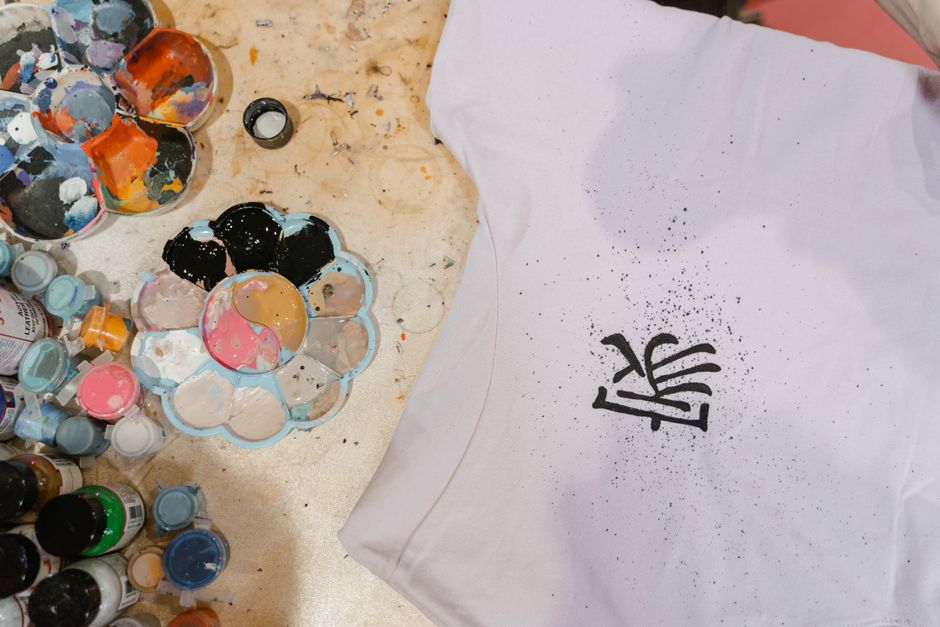
DTG printing works much like an inkjet printer for fabric. The machine sprays water-based inks directly onto the shirt fibres, producing photo-quality results with smooth gradients and an almost undetectable hand feel. There is no setup fee and no minimum order, which makes DTG the default choice for single shirts, small teams, and designs with many colours or photographic elements.
The trade-off is speed and unit cost on larger runs. DTG prints one shirt at a time, so a 50-shirt order takes longer than it would with screen printing, and the per-unit price does not drop as dramatically with volume. DTG also performs best on 100% cotton garments. While it works on darker fabrics, the process requires a pre-treatment that can slightly alter the feel of the print area.
Screen Printing – The King of Bulk Orders
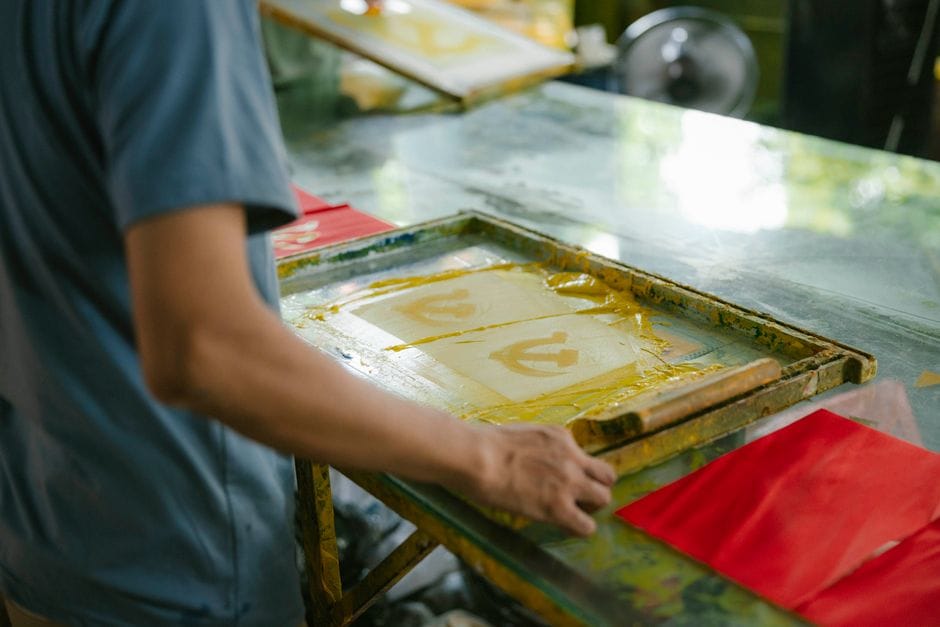
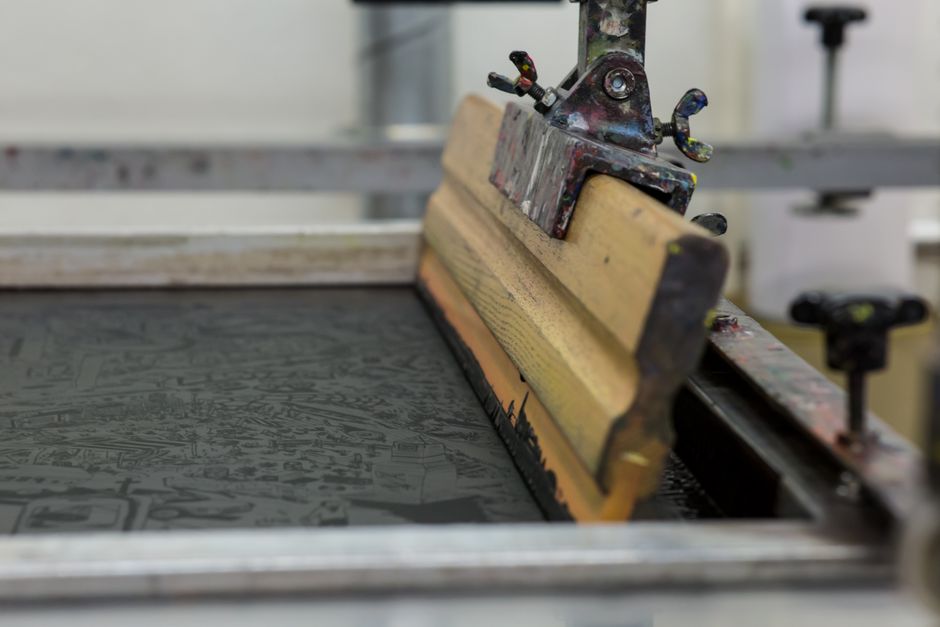
Screen printing remains the most cost-effective method for runs of 25 shirts or more. Each colour in the design requires its own screen, and once those screens are made, ink is pushed through them onto the shirt at high speed. The result is a vibrant, durable print that withstands years of heavy wear and washing.
The setup process does involve a fee per screen, which is why screen printing is not economical for very small orders. A one-colour logo on 10 shirts will cost significantly more per unit than the same logo on 50 shirts. Screen printing also struggles with photographic gradients and designs with more than a handful of colours, as each additional colour adds another screen and more cost. For bold, simple designs on larger quantities, nothing beats it.
Direct-to-Film (DTF) & Embroidery – The Specialists
DTF has grown rapidly in popularity over the last few years. The design is printed onto a special film, coated with adhesive powder, cured, and then heat-pressed onto the garment. DTF excels on dark fabrics and synthetic blends, producing a slightly raised, flexible print that does not require the heavy pre-treatment of DTG. It is an excellent option for small runs on polyester sportswear or for designs that need to pop on black shirts.
Embroidery sits in a category of its own. Thread stitched directly into the fabric creates a premium, three-dimensional finish that DTG and screen printing cannot replicate. It is the standard for corporate polos, caps, and any application where a professional, long-lasting impression matters. Embroidery does have limitations: fine detail, small text, and photographic images do not translate well to thread. It is best reserved for logos and simple text on heavier garments.
Realistic Pricing for Custom T-Shirts in Australia (2026 Update)
Pricing in the custom t-shirt industry can feel opaque. Many providers require you to step through their design tool before revealing a final price, which makes comparison shopping difficult. Here is what you should realistically expect to pay in 2026.
The "No Minimum" Trap – What You Actually Pay
No minimum order sounds appealing, and for DTG and DTF printing it is genuinely true. But the per-unit price on a single shirt reflects the labour involved in setting up and printing just one piece. A single AS Colour tee with a full-colour DTG print typically lands between $25 and $35 AUD. A Gildan equivalent might come in between $20 and $28 AUD.
When you move to small runs of 10 to 24 shirts with a one-colour screen print, the per-unit price drops into the $15 to $22 AUD range. The setup fee is spread across more garments, and the printing itself becomes faster. At 50 shirts or more, screen printing really hits its stride, with per-unit costs falling to $10 to $15 AUD for a straightforward one-colour design on a Gildan blank. AS Colour will add a few dollars per shirt at every tier.
Hidden Costs to Watch For
Artwork setup fees are common in screen printing and are sometimes charged separately from the per-screen cost. If your design needs cleaning up, vectorising, or colour separation, expect a fee. Shipping costs also vary widely. Some providers offer free shipping once your order crosses a threshold, commonly $100 for small orders and $500 for bulk. Below those thresholds, standard courier rates apply. Rush order fees are another factor: same-day or next-day dispatch almost always carries a surcharge, so plan ahead if your deadline is flexible.
How to Get the Best Price
Stick to one or two colours if you are using screen printing. Each additional colour requires another screen and another setup charge. Choose Gildan over AS Colour when the budget is tight and the shirts are for a short-term event rather than ongoing brand representation. Order in multiples of 25 to hit the standard price breaks that most printers build into their quoting systems. And always factor shipping into your total cost before comparing quotes from different providers.
Turnaround Times & Shipping Across Australia
The standard turnaround time for custom t-shirt printing in Australia is three to five business days from artwork approval. This is the window most printers work within for DTG and small to medium screen printing runs. Express options do exist: some providers offer same-day dispatch if your order and artwork are confirmed before midday, though this service attracts a premium.
Once dispatched, shipping to metro areas is fast. Sydney, Melbourne, and Brisbane typically see delivery within one to three business days via courier. Regional centres and remote areas, particularly in Western Australia and Queensland, need more time. Add three to seven business days to your expected delivery window if you are outside a capital city. Check whether your printer uses Australia Post or a dedicated courier service, as this can affect both speed and the reliability of tracking.
Free shipping thresholds are worth understanding before you commit. Some printers offer free shipping on orders over $100, which covers most small DTG runs. Others set the bar at $500, which only bulk orders will reach. Calculate the landed cost per shirt, including shipping, to make an accurate comparison between providers.
Sustainability & Ethical Production – What Australian Buyers Want in 2026
Australian consumers in 2026 are more informed and more demanding about the ethics behind their purchases. The custom apparel industry has responded, but not all claims are equal. When evaluating a printer, look for specific, verifiable certifications rather than vague marketing language.
WRAP certification is the gold standard for ethical manufacturing, guaranteeing that the facility is sweat-shop free and meets strict standards for working conditions. Ethically sourced cotton and water-based inks are two other markers of a responsible operation. Water-based NeoPigment inks, in particular, produce vibrant prints without the heavy chemicals associated with older plastisol formulations.
Local production also matters. Printing in Brisbane or Melbourne rather than fulfilling orders through an overseas factory reduces the carbon footprint of your order and supports Australian manufacturing jobs. At QTS Workspace, we use water-based NeoPigment inks and ethically sourced blanks because we believe quality and responsibility go hand in hand.
How to Design Your Own T-Shirt (Without Needing Graphic Design Skills)
You do not need to be a graphic designer to create a shirt you will be proud to wear. Modern online design tools make the process straightforward, even if you have never opened Photoshop in your life.
Start by uploading your logo or artwork. The best results come from high-resolution PNG files with a transparent background, or vector files in AI or EPS format. Vector files are ideal because they can be scaled to any size without losing sharpness. JPEGs work for simple designs, but be aware that they have a fixed resolution and a white background that may need to be removed.
Common mistakes to avoid include using text that is too small to read once printed, cramming too many colours into a screen printing design and driving up the cost, and uploading low-resolution images that will look pixelated on fabric. If you are unsure, zoom in on your design at actual print size on screen: if it looks blurry there, it will look blurry on the shirt.
For those who lack design skills or simply want a faster option, pre-designed templates are a practical solution. Many printers offer event-specific designs, humorous graphics, or seasonal themes that you can personalise with your own text. This approach gets you a professional-looking shirt without the time and expense of hiring a designer. You can also start with a blank canvas in our design studio and experiment with different layouts before committing.
Frequently Asked Questions About Custom T-Shirt Printing Australia
What is the minimum order for custom t-shirts?
Most Australian printers now offer no minimum order for DTG and DTF printing. Screen printing typically starts at 10 to 25 pieces due to the setup costs involved.
How long does custom t-shirt printing take?
Standard turnaround is three to five business days from artwork approval. Express services can deliver in 24 to 48 hours for an additional fee.
Can I mix different shirt colours in one order?
Yes, you can mix colours. For DTG and DTF, this has no impact on price. For screen printing, each colour variation may require a separate setup, which can increase costs.
Do you print on AS Colour or Gildan?
Both are standard options across the Australian market. AS Colour is preferred for a premium fit and feel, while Gildan is the budget-friendly choice for large runs and events.
Conclusion – Your Next Step for Custom T-Shirts in Australia
Every custom t-shirt project comes down to three key decisions. First, choose your blank: AS Colour for a premium result that reflects well on your brand, or Gildan for a cost-effective solution that gets the job done. Second, choose your printing method: DTG for small runs and full-colour designs, screen printing for bulk orders with simple graphics, or DTF and embroidery for specialist applications. Third, decide on your quantity, knowing that larger orders bring the per-unit price down significantly.
Once you have those decisions clear, the rest is simple. Use an online design tool to upload your artwork or create something from scratch, check your shipping costs and turnaround time, and place your order. Ready to print? Visit the QTS Workspace design studio to get an instant quote and see your design come to life.
